How Can You Choose the Best Fibre Rods Suppliers for Export Projects?
How Should You Start Sourcing Fibre Rods for Export Projects?
Choosing fibre rods suppliers is not just about chasing the lowest number on a quote sheet. In many orders, the rod may go into concrete, take tensile loads, work as electrical insulation, or become one part of a bigger assembly. A better sourcing job starts with clear drawings, real performance needs, and a supplier check that looks past a clean product page. For more sourcing topics in new materials, you can visit the Sourcing section.
Market numbers also show why buyers should check this category with care. The American Composites Manufacturers Association 2025 State of the Industry Report said global glass fiber demand rose by about 3% in 2024, from 16.3 billion pounds in 2023 to 16.8 billion pounds in 2024. Higher demand brings more supplier choices, but not every factory can keep diameter, resin cure, straightness, and surface quality steady from batch to batch.

Match the Rod Type to the Job
Start with the job, not the catalog. A GFRP reinforcing bar for concrete is not the same as a smooth fiberglass rod used for tents, cable tools, fish tapes, or electrical parts. A pultruded rod may look like a basic round product, but fiber direction, resin type, surface treatment, and diameter tolerance decide where it can be used. If the rod will be bonded, gripped, bent, cut, or kept outdoors, tell the supplier at the start so they quote the right item.
Translate Drawings into Supplier Language
A drawing should show diameter, length, tolerance, color, surface, resin system, fiber type, packing method, and test requirements. If you only ask for “10 mm FRP rod,” two factories can send prices for two different products. Small details matter in this product line. A rough sand-coated bar and a glossy round rod may both be called fiberglass rod, but they are made for different work.
Build a Shortlist Before Talking Price
Ask for three items first: a product data sheet, a recent test report, and photos or videos from production and packing. A workable shortlist may only need three to five suppliers. That is enough for most export projects. Too many quotes make the comparison hard to read, and the lowest offer may hide missing tests, poor packing, or a resin system that does not fit your market.
What Material Choices Matter Most?
Fibre rods are usually made by mixing continuous fibers with a polymer resin matrix. The fiber takes much of the load, while the resin holds the fibers together, moves stress through the rod, and protects it from moisture, chemicals, and handling damage. A good supplier should explain these points in clear words. If they only send long material names without basic usage notes, ask again.
Glass Fiber for Cost and Corrosion Resistance
Glass fiber reinforced polymer, often called GFRP, is widely used because it gives a fair mix of cost, strength, and corrosion resistance. The Federal Highway Administration has described lightweight and corrosion resistance as key advantages of FRP bridge decks, GFRP rebars, CFRP prestressing strands, and pultruded structural members. For buyers, this means GFRP rods often fit concrete reinforcement, marine areas, utility work, and outdoor products where steel rust creates service problems. It is usually the first material to check when the order needs volume and stable pricing.
Carbon Fiber for High Stiffness
Carbon fiber rods cost more, but they make sense when stiffness and low weight matter more than the unit price. They may be used in drones, robotics, measuring tools, sporting goods, and higher-end industrial frames. Do not change from glass to carbon only because carbon sounds higher grade. Ask for flexural modulus, tensile strength, surface finish, and actual use limits. Carbon can also cause galvanic issues when it touches some metals, so the assembly design still needs checking.
Basalt and Aramid for Special Conditions
Basalt fiber rods are often discussed as a middle choice between glass and carbon, while aramid is used for toughness and impact resistance in selected cases. These materials are not automatic upgrades. They need the right resin and steady process control. If a supplier recommends basalt or aramid, ask which standard they test against and whether they can ship the same grade every month. A fiber name does not mean much if the batches keep changing.
Which Quality Evidence Should Suppliers Show?
Good suppliers do not ask buyers to trust sales words only. They should send data that matches the rod type and the final use. The useful proof usually comes from known test methods, batch records, and samples linked to normal production. A perfect sample made only for the lab is not enough for an export order.
ASTM D7205 Tensile Test Reports
For FRP bars used as reinforcing elements, ASTM D7205/D7205M-21 is a key public standard for tensile properties of fiber reinforced polymer matrix composite bars. It helps set how tensile strength, elastic modulus, and elongation are tested. If your rods are structural or semi-structural, ask whether the supplier has reports from an outside lab. Also check whether the test specimens used the same diameter and surface as your order, because a different sample can give a different result.
Resin, Fiber Content, and Diameter Records
A capable supplier should know its resin system, fiber grade, and approximate fiber content. It should also control diameter with gauges during production. For a 6 mm or 8 mm rod, a small tolerance drift can cause assembly trouble, especially when rods pass through fittings or drilled holes. Ask how often operators check diameter and straightness on the line. A plain answer with check frequency is better than a long talk with no records.
Traceable Samples from Production Batches
Samples should come from normal production when possible. Mark each sample with date, line, diameter, resin, and surface. Then test the same points that matter in the real order, such as cutting, bonding, threading, insertion, surface abrasion, or outdoor exposure. A sample that looks fine on a desk can still fail during packing, machining, or jobsite handling, so do not stop at appearance only.
How Do You Compare Price Without Buying Trouble?
Fibre rod pricing moves with glass fiber, carbon fiber, resin, labor, energy, packaging, and freight. Reliable public data for live export prices is not available in a way that proves one current market price for every size and grade. That is normal for custom materials. Compare total landed risk instead of reading only the unit price.
Unit Price Is Not the Total Cost
A lower price can be acceptable if the supplier uses a steady line and honest material. It becomes costly when rods arrive bent, scratched, under-cured, or mixed by length. Add testing fees, inland transport, export packing, customs documents, replacement risk, and the cost of a delayed project. For long rods, shipping damage can wipe out a small saving very quickly.
Tooling, MOQ, and Packaging Lines
Ask if the quoted size uses existing tooling. Existing dies usually mean shorter lead time and lower process risk. Custom diameters, special colors, or uncommon surfaces may need tooling fees and trial runs. MOQ should also fit the supplier’s production rhythm. If a factory pushes a very high MOQ for a simple size, it may be combining your order with other jobs. That can be workable, but you need clear batch separation.
Incoterms and Lead Time Reality
Compare FOB, CIF, DAP, or other Incoterms with care. A cheap CIF quote can come with weak packing or slow vessel choices. Lead time should cover raw material purchase, production queue, testing, packing, customs clearance, and sailing schedule. For repeat orders, ask the supplier to keep a written lead time range. A fixed promise like “15 days always” is not very useful if resin stock changes or the line is already full. See also: Application.
What Factory Questions Reveal Real Capability?
A factory visit helps, but many export buyers cannot travel for every order. You can still learn a lot by asking direct production questions. The point is not to make the supplier look bad. The point is to see whether they control the work behind the rod.
Pultrusion Line Control
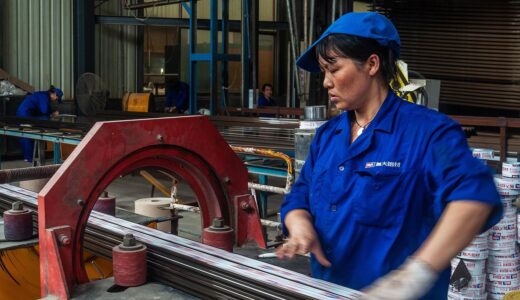
Most continuous fibre rods are made by pultrusion. Fibers are pulled through resin, guided into a heated die, cured, and cut to length. Ask about line speed, die temperature control, resin mixing, curing checks, and how operators handle broken fibers. A supplier that answers with actual process steps usually knows the job. A supplier that only says “quality is very good” is not giving you much to judge.
Surface Finish and Bond Behavior
Surface finish is not just for looks. Smooth, ribbed, spiral-wrapped, sand-coated, and peel-ply surfaces bond and handle in different ways. ACI 440.1R-15 notes that FRP bars do not yield like steel, and design practice treats their behavior differently. The same guide also reports FRP bar density as roughly one-sixth to one-fourth that of steel. This low weight helps in transport and installation, but the bond, modulus, and failure mode still need proper design checks.
Change Management for Repeat Orders
Ask what happens if the supplier changes resin, fiber source, die, surface sand, or curing settings. You should receive notice before production, especially for approved parts. Repeat orders often fail when a quiet material change slips in. A basic change-control rule in the purchase order can save weeks of argument later. It is normal buying work, not extra paperwork for show.
How Should You Check Packaging and Shipment Risk?
Export packaging is part of product quality. Fibre rods can be long, flexible, and easy to scratch. Some rods are strong in tension but do not handle side impact well. Packing should protect the rods from bending, abrasion, water, UV, and mixed-batch confusion.
Straightness Protection in Long Bundles
Long rods should be bundled with enough support points. For sea freight, ask for photos of the full bundle, end protection, pallet or crate design, and loading method. If rods are longer than standard pallets, the crate must stop sagging during storage and transport. A small bend after a long trip can become a real problem when rods need to feed into machines or sleeves.
Labels That Match Customs Documents
Each bundle should show product name, diameter, length, quantity, batch number, gross weight, net weight, and buyer order number. The commercial invoice and packing list should use the same wording. This detail may feel basic, but customs delays often start with mismatched names or unclear descriptions. “Fiberglass products” is less useful than a clear product description that matches the actual goods.
Moisture, UV, and Handling Control
Most cured FRP rods can handle normal moisture, but wet packing, sharp straps, and long sun exposure are still bad practice. Request plastic wrap, corner protection, dry crates, and handling marks when the shipment needs them. The National Academies 2025 report on corrosion-resistant reinforcing bars notes that FRP reinforcing bars require added design considerations, and AASHTO guidance is used for GFRP-reinforced concrete. The same careful thinking should carry into packing and shipping, because damage after production is still a buyer’s problem.
FAQ
Use these quick answers when you compare suppliers, samples, and first trial orders.
Q1: How Do You Know If a Fibre Rod Supplier Is Reliable?
A: Check whether the supplier can provide product data sheets, recent test reports, batch traceability, production photos, and clear packing details. A reliable supplier answers technical questions directly and does not push price before specs are clear.
Q2: Are GFRP Rods Better Than Steel Rods?
A: GFRP rods resist corrosion and weigh much less than steel, but they do not behave like steel in design. They have different stiffness, bond behavior, and failure mode. Use engineering guidance for structural jobs instead of making a one-to-one swap.
Q3: What Test Report Should You Ask for First?
A: For structural FRP bars, start with tensile test data based on ASTM D7205/D7205M when applicable. For non-structural rods, ask for the tests that match your use, such as diameter tolerance, flexural performance, surface hardness, or insulation properties.
Q4: Why Do Quotes From Fibre Rods Suppliers Vary So Much?
A: Quotes vary because fiber type, resin, diameter, surface, tolerance, tooling, MOQ, packaging, and freight all change the cost. A low price may be fair, but only if the material, tests, and shipment plan match your requirement.
Q5: Should You Buy a Trial Order Before a Bulk Order?
A: Yes, for most new suppliers. A trial order lets you check appearance, straightness, cutting, bonding, packing, documents, and delivery time. If the trial batch is stable, your bulk order has a much better chance of arriving as expected.