How Does the Autoclave Rubber Curing Process Work for Industrial Parts?
What Is the Autoclave Rubber Curing Process?
The autoclave rubber curing process uses heat, pressure, and holding time inside a pressure vessel to change green, uncured rubber into a cured elastomer part. For buyers choosing a production route, it is usually compared with compression molding, transfer molding, hot air curing, and continuous vulcanization. The choice often comes down to product shape, batch size, tooling cost, and surface finish. More background is available in the Processes section.
Heat, Pressure, and Time Work Together
An autoclave cure depends on three basic points: the rubber compound has to reach the target temperature, stay at that temperature for enough time, and remain under stable pressure. Steam is often used because it gives heat to cooler surfaces as it condenses. That is why steam contact curing is still common for hoses, wrapped sleeves, rubber-lined parts, and some large engineered products. The point sounds simple, but a thick rubber section may heat much slower in the center than it does on the surface, and that difference can decide whether the batch passes or fails.
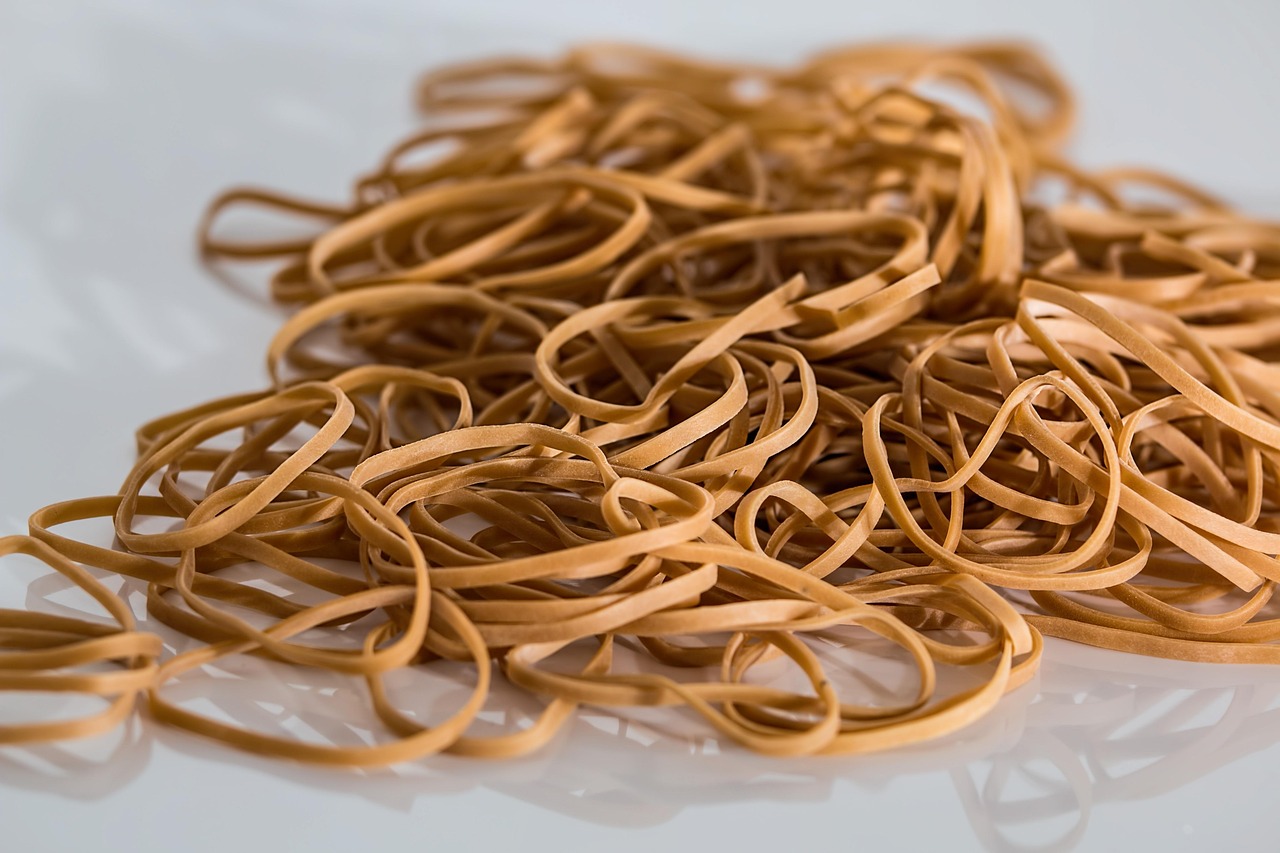
Crosslinking Turns Green Rubber Into a Stable Part
Curing is not the same as drying. In sulfur-cured natural rubber and many diene rubbers, vulcanization creates crosslinks between polymer chains. The National Bureau of Standards reported in a 1969 Journal of Research paper that natural rubber vulcanization with sulfur forms a three-dimensional network, while side reactions can change cure efficiency. On the shop floor, this means the part becomes more elastic, less sticky, and less likely to take a permanent set under load.
Autoclaves Suit Long, Hollow, or Wrapped Products
Autoclaves are useful when a press mold is not the right tool for the job. Long hose assemblies, fabric-reinforced sleeves, hand-built rollers, tank linings, and large rubber-covered metal parts may be hard or costly to place in a compression mold. The autoclave gives the full assembly a heated and pressurized space during curing. This allows a shaped product to cure without being forced into a closed mold cavity.
How Does a Typical Autoclave Cure Cycle Run?
A good cure cycle is not only a temperature setting on the control panel. The factory also has to control loading, ramp rate, soak time, blowdown, and cooling. The U.S. EPA AP-42 Section 4.12 rubber products documentation from November 2008 describes autoclave curing as using saturated steam at elevated pressure and notes its use in nontire engineered rubber manufacturing.
Loading Starts With Shape Control
Before the door closes, the product should already have the correct shape. Hoses may be wrapped on mandrels, rollers may be built in spiral layers, and rubber linings may be applied to steel shells. Spacing between parts is not a small detail because steam needs a clear path to the surface. If parts are packed too tightly, the heating may be uneven, and even a small fold in release cloth or tape can leave a mark that a customer will see during incoming inspection.
Ramp and Soak Set the Real Cure
The ramp brings the chamber up to the cure temperature, and the soak keeps it there for the needed time. In one EPA test program, a steam-contact autoclave cured batches of about 50 pounds of rubber strips, with three batches per rubber type, at 340°F, about 171°C, and roughly 110 psig. This is a useful public example, but it is not a cure recipe for every plant. The real cycle depends on compound, thickness, reinforcement, mandrel mass, and the cure system used in the rubber.
Blowdown and Cooling Need Care
Blowdown lowers pressure and releases steam at the end of the cycle. If the pressure drops too fast, hot rubber may move, wrapped parts may loosen, and condensate may run across surfaces in the wrong direction. Cooling is also part of the process, not just a waiting step. The part is still settling as it leaves the hot chamber and comes back to a safe handling temperature.
Which Materials and Products Fit This Process Best?
Autoclave curing works well when the part is already formed and needs even heat around a large surface. It is not always better than a mold. It is the better option when product geometry, tooling cost, or order volume makes a closed mold less practical.
EPDM, SBR, Neoprene, and Specialty Compounds
Common materials include EPDM, SBR, natural rubber blends, chloroprene rubber, nitrile rubber, HNBR, CPE, and some peroxide-cured compounds. The EPA 2008 rubber documentation tested a broad group of generic mixes, including EPDM, neoprene, Hypalon-type material, HNBR, CPE, and SBR. This range shows why one cure schedule should not be copied from one rubber family to another without checking. A small change in compound can change cure time, hardness, smell, surface finish, and final test values.
Hoses, Sleeves, Rollers, Linings, and Large Parts
Industrial hose is one of the usual examples for this process. A hose can be built on a mandrel, reinforced, covered, wrapped, and then cured in the autoclave. Rollers, rubber-covered shafts, inflatable bladders, expansion joints, and protective linings also fit this route. Export buyers usually care less about the machine name and more about stable dimensions, low surface defects, and test results that repeat from batch to batch.
Silicone and High Temperature Cases
Some silicone and specialty elastomer products use different cure chemistry, including peroxide or addition systems. They should not be grouped with sulfur-cured natural rubber unless the compound sheet has been checked. Heat resistance, post-cure needs, and volatile release may be very different. When there is no reliable public data for the exact grade, the safer step is to test the actual compound and keep the result on file.
What Process Data Should You Control?
Good autoclave work usually looks boring on paper, and that is a good sign. Temperature charts, pressure logs, cure curves, batch numbers, and operator notes should match. If a factory cannot back a claim with a record, that claim becomes a guess when a customer complaint comes in.
Temperature Records Tell the Truth
Chamber temperature is only one part of the cure picture. Thick rubber, steel mandrels, and fabric reinforcement heat more slowly than the steam around them. For demanding parts, trial thermocouples can help show the real lag time inside the product. A chamber may show that it is ready while the center of the part is still catching up, and that is where many undercure issues start.
Pressure Keeps Steam Condensed and Heat Moving
Pressure supports the steam temperature and helps heat move into the product surface. OSHA’s pressure vessel guidance states that pressure vessels are generally designed to operate above 15 psig, and it warns that cracked or damaged vessels can cause leakage or rupture hazards. For an autoclave buyer, pressure control is not only a quality point. It is also a safety point that should be checked before long-term orders are placed.
Cure Curves Reduce Guesswork
Lab cure data helps the production team set time with less guesswork. ISO 6502-2:2025 covers oscillating disc curemeter measurement, while ISO 6502-3:2023 covers rotorless curemeter measurement for selected vulcanization characteristics. ASTM D3182-21 also describes standard compound preparation and vulcanization procedures for quality control, research, and material comparison. These standards do not give one fixed time for every part, but they help the supplier make decisions from measured data instead of habit.
What Quality Problems Can Come From Autoclave Curing?
Most autoclave defects come from heat transfer, moisture control, wrapping, or a compound mismatch. The hard part is that the outside may look acceptable while the inside is not fully cured. A cut test, hardness check, tensile test, or compression set test often gives a clearer answer than appearance alone. See also: Application.
Undercure Leaves Soft or Weak Areas
Undercure can leave rubber sticky, weak, or low in modulus. In a hose, it may appear as poor adhesion between layers or weak pressure performance. In a roller, it may show as flat spots, swelling, or uneven hardness. Common causes include short soak time, wrong cure temperature, heavy loading, wet wrapping, or a compound change that was not added into the cure cycle.
Overcure Makes Rubber Hard or Brittle
Overcure can raise hardness, reduce elongation, and shorten fatigue life. Natural rubber and many sulfur systems can be sensitive to too much heat history. If a product feels dead instead of elastic, the full thermal record should be checked, not only the final chamber setpoint. One extra hold during a shift change can be enough to push a borderline compound too far.
Trapped Air and Condensate Mark the Surface
Surface blisters, water marks, tape lines, and dull areas may come from trapped air or condensate. Steam quality, drain position, rack design, and part spacing all affect the result. The EPA 2008 documentation also notes that steam-contact autoclaves can create both airborne and waterborne pollutant streams, so condensate handling is not only about appearance. It may also be an environmental control point that the supplier needs to manage.
How Can You Improve Safety, Compliance, and Repeatability?
An autoclave is a pressure vessel before it is a curing machine. It should be treated that way in daily work. A strong rubber part does not make up for a risky vessel, a missing relief device, or unclear lockout practice. Safety paperwork may slow the job down a little, but pressure failures leave very little room for error.
Pressure Vessel Rules Come First
The plant should follow the vessel code, local inspection rules, manufacturer limits, and its own safety procedures. OSHA states that safe design, installation, operation, and maintenance of pressure vessels according to proper codes and standards are essential to worker safety. For buyers, it is reasonable to ask whether the supplier records vessel inspections, relief valve checks, door interlock checks, and operator training. These records do not replace product tests, but they show whether the process is being run in a controlled way.
Venting and Condensate Handling Matter
Steam contact curing can release condensate and vent gases during the cycle and blowdown. The EPA AP-42 documentation evaluated emissions and water discharge from a steam-contact system, which is a useful reminder that curing is not only an internal shop process. If the product uses amines, sulfur donors, oils, resins, or specialty curatives, buyers should ask how vents and drains are handled. This is especially important for projects with strict plant audit or environmental requirements.
A Practical Batch Checklist
A checklist is useful only when operators fill it in during the job, not after the batch is already finished. For export orders, the same checklist also helps sales and quality teams answer customer questions without relying on memory.
- Confirm compound code, batch number, and shelf life before building the part.
- Check mandrel, wrap, spacing, and load weight before closing the door.
- Record ramp, soak, pressure, blowdown, and cooling data for each batch.
- Use lab cure curves when compound, thickness, or reinforcement changes.
- Test hardness, adhesion, tensile strength, or compression set based on the product risk.
No reliable public source gives one cure time for every rubber compound and every thickness. That is not a problem with the data; it is simply how rubber behaves in real production. The right process uses public standards, supplier data, trial records, and final part testing together. When those records stay stable, the autoclave rubber curing process can make tough and repeatable industrial rubber parts with fewer surprises after shipment.
FAQ
Q1: What Is the Main Purpose of Autoclave Rubber Curing? A: The main purpose is to cure shaped rubber parts with controlled heat and pressure so the compound develops stable elastic properties, strength, and dimensional form.
Q2: Is Steam Always Used in an Autoclave Rubber Curing Process? A: No. Steam-contact curing is common, but some systems use indirect steam, steam and hot air, or hot air only, depending on the rubber compound and product design.
Q3: What Temperature Is Best for Rubber Autoclave Curing? A: There is no single best temperature. Public EPA test data includes 340°F, about 171°C, as one example, but the correct setting depends on compound chemistry, thickness, and required properties.
Q4: How Do You Know if a Rubber Part Is Fully Cured? A: Use cure curve data first, then confirm with production tests such as hardness, tensile strength, elongation, adhesion, compression set, or product-specific pressure testing.
Q5: Why Should Export Buyers Ask About Autoclave Cure Records? A: Cure records help prove that each batch followed the agreed cycle. They also make quality disputes easier to solve when dimensions, hardness, adhesion, or service life are critical.