Carbon fibre plate applications and selection factors for engineering projects
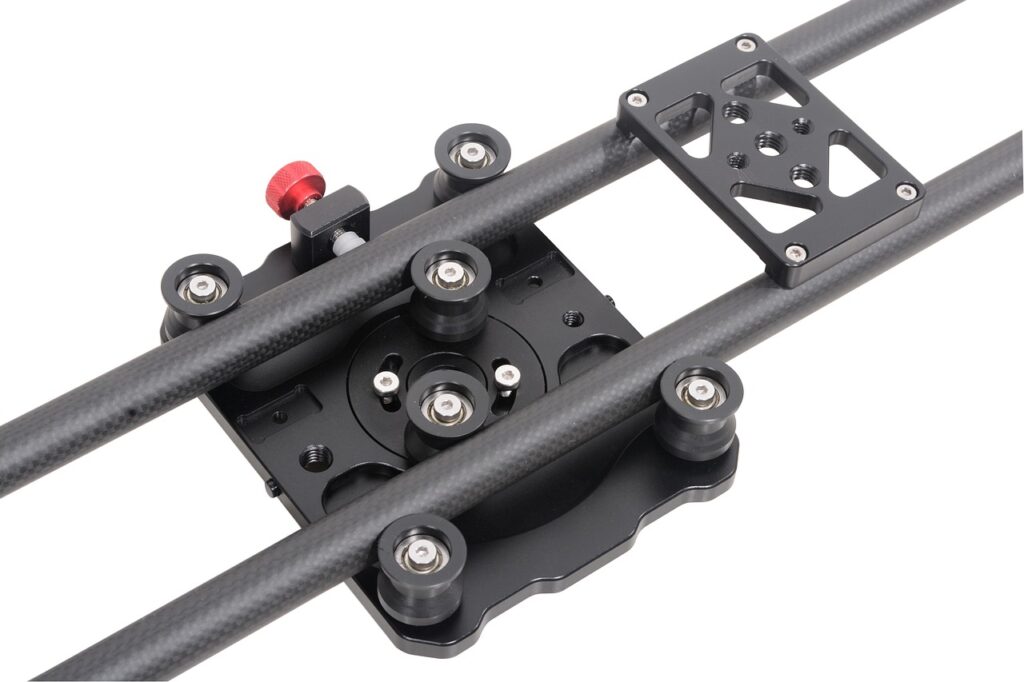
What a carbon fibre plate does in engineering applications
A carbon fibre plate is a flat carbon fibre reinforced polymer laminate or pultruded strip used when a component must carry tensile, bending or panel loads at a lower weight than many metal alternatives. It is most useful where stiffness-to-weight ratio, corrosion resistance, fatigue performance and dimensional stability matter more than low material cost or easy reshaping.
Common application areas include civil structure strengthening, aerospace interiors and secondary structures, motorsport and automotive panels, robotics frames, marine hardware, sports equipment, fixtures and precision machinery. The key point is that a carbon fibre plate is not a universal metal replacement. Its performance depends on fibre direction, laminate lay-up, resin system, thickness, hole design, bonding method and environmental exposure.
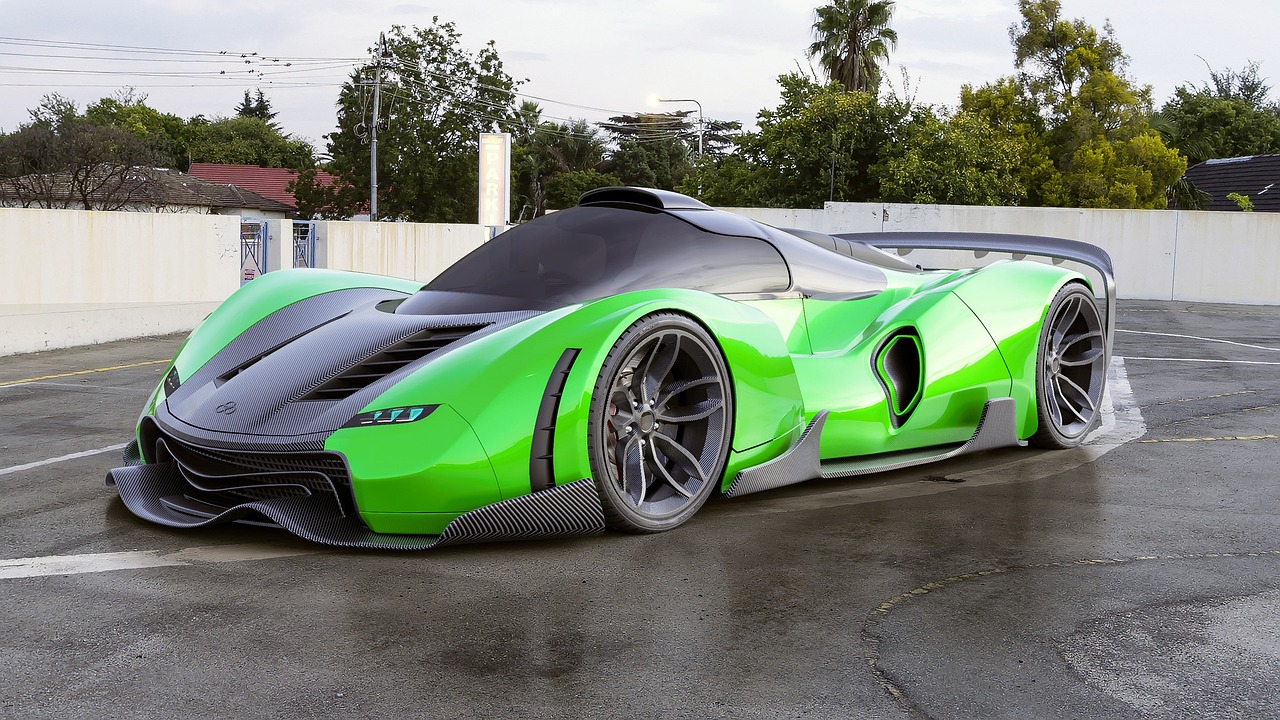
For more materials and application-focused articles, visit the Application section.
Why carbon fibre plate is different from metal plate
Metal plate is usually treated as broadly isotropic in many design calculations, meaning its properties are similar in different directions. Carbon fibre reinforced polymer behaves differently. A unidirectional plate can be very stiff and strong along the fibre direction, but much weaker across the fibres and through the thickness. Woven or quasi-isotropic laminates place fibres in more directions, improving multi-directional behaviour but usually reducing peak stiffness in any single direction.
This anisotropy is why carbon fibre plate can be highly efficient in one project and unsuitable in another. If the primary load path is known, fibres can be aligned with that load path. If loads are complex, impact-prone or concentrated around fasteners, the laminate needs more balanced reinforcement, careful joint design and additional testing.
Public manufacturer datasheets help illustrate the material range without defining a universal value. Hexcel data for some cured carbon/epoxy laminates lists nominal laminate density near 1.57–1.58 g/cm³, while Toray data for T300 carbon fibre epoxy composite normalized to 60% fibre volume lists tensile modulus around 140 GPa in the fibre direction. These are product-specific values, not generic guarantees, but they show why CFRP plates are attractive when low mass and high directional stiffness are priorities.
Application map for carbon fibre plate
The most useful question is not simply, “Can carbon fibre replace steel?” A better engineering question is, “Can the plate be designed so that the fibres carry the right load, the joint transfers that load safely, and the environment does not reduce performance beyond the design allowance?”
| Application area | Typical reason for use | Main design caution |
|---|---|---|
| Concrete and bridge strengthening | Externally bonded or near-surface-mounted FRP can add tensile capacity with low added weight | Requires qualified design, surface preparation, bond control and inspection |
| Aerospace and UAV structures | High stiffness-to-weight ratio and corrosion resistance | Certification, damage tolerance, process control and repair rules are critical |
| Motorsport and performance automotive | Light panels, brackets, splitters, floors and stiffening elements | Impact, heat, vibration and galvanic contact with metals need attention |
| Robotics and automation | Light, rigid frames improve acceleration and positioning response | Fastener holes, edge damage and repeated assembly can weaken laminates |
| Marine and outdoor equipment | Corrosion resistance in wet service and controlled moisture uptake with suitable resin systems | UV exposure, saltwater fittings and resin selection affect durability |
| Sports and consumer products | Controlled stiffness, premium appearance and weight reduction | Cosmetic weave does not prove structural capability |
| Industrial fixtures and precision machinery | Low mass, stiffness and dimensional stability in moving assemblies | Machining dust, flatness tolerance and thermal expansion direction must be specified |
Civil strengthening is a standards-driven use case
One of the clearest engineering uses for carbon fibre plate is strengthening existing concrete members. In this field, plates or laminates are bonded externally to beams, slabs or other members, or installed near the surface in prepared grooves. The goal is usually to add tensile reinforcement without major section enlargement.
This is not the same as gluing a decorative carbon sheet to concrete. The design must account for substrate strength, bond stress, debonding, fire exposure, creep, environmental reduction factors and quality control.
The American Concrete Institute’s ACI CODE-440.13-24, published in 2024, was developed for design professionals working with fibre-reinforced polymer strengthening strategies for existing concrete structures. Earlier ACI guidance such as ACI PRC-440.2 has also been used for externally bonded FRP systems. These documents matter because FRP strengthening behaves differently from steel plate bonding, section enlargement or external post-tensioning.
For readers evaluating carbon fibre plate in construction, the practical takeaway is straightforward: structural strengthening should be treated as an engineered system, not a material purchase. The plate, adhesive, primer, surface preparation, installation temperature, cure, inspection and loading condition all affect the result. A plate with excellent tensile properties can still fail to deliver capacity if the concrete surface, adhesive bond or anchorage detail is inadequate.
Mobility, aerospace and machine design uses
In aerospace, aviation regulators and technical guidance describe advanced composites as materials that can provide combinations of light weight, strength, corrosion resistance and heat resistance that are not achievable by the constituents alone. Carbon fibre plate is commonly considered for brackets, fairings, panels, equipment supports, UAV frames and non-primary structural parts. Certified aircraft structures, however, require formal material allowables, process control, damage tolerance and approved repair procedures.
In automotive and motorsport projects, carbon fibre plate is often used for splitter planes, undertrays, seat backs, dashboard panels, mounting brackets and reinforcement plates. The benefit is not only weight saving. A thin CFRP plate can be designed to be stiff enough to reduce deflection in a panel or bracket while keeping mass low. Heat from exhaust zones, point loads from bolts, stone impact and vibration can all become design drivers.
Robotics and automation provide another practical example. A lighter moving arm, gantry plate or end-effector support can reduce inertia, allowing faster acceleration or lower motor load. Carbon fibre plate can help when the load path is predictable and when holes, inserts or bonded joints are designed carefully. If the assembly will be repeatedly adjusted, metal inserts or hybrid metal-composite details may be more reliable than threading directly into the laminate.
Selection factors that matter more than thickness alone
Buyers often start with thickness, but thickness is only one part of the specification. Two plates with the same thickness can behave very differently if one is unidirectional and the other is quasi-isotropic, or if one uses a high-temperature epoxy and the other uses a lower-temperature resin. A useful specification should cover the following points. See also: Materials.
- Lay-up and fibre orientation: 0° unidirectional plates maximize stiffness in one direction, while 0/90 or quasi-isotropic laminates support more complex loading.
- Resin system: Epoxy, vinyl ester and thermoplastic matrices have different heat resistance, toughness, chemical resistance and processing behaviour.
- Manufacturing method: Pultruded plates can be efficient for long unidirectional strips, while laminated sheets may provide more flexible lay-up options.
- Surface finish: A glossy cosmetic surface is not always ideal for bonding. Bonded applications often require controlled surface preparation.
- Dimensional tolerance: Flatness, thickness tolerance and edge quality matter for fixtures, machine panels and assemblies with tight gaps.
- Test data: Data should match the laminate form, fibre direction and environment relevant to the application.
As of October 2026, ASTM lists D3039/D3039M-17(2025) as an active test method for in-plane tensile properties of polymer matrix composite materials, and D7264/D7264M-26 as an active test method for flexural properties. ASTM D7565/D7565M is also relevant for tensile properties of flat FRP composite materials used in strengthening civil structures. These standards do not make a plate suitable by themselves, but they help define how reported properties were measured.
Design and installation limitations
Carbon fibre plate has limitations that should be addressed early. The first is impact behaviour. A laminate can suffer barely visible damage, delamination or local crushing even when the surface looks acceptable. This is especially important in aircraft, motorsport, marine and robotic applications where inspection access may be limited.
The second limitation is joining. Drilled holes interrupt fibres and can create stress concentrations. Bolted joints need appropriate edge distances, washer or insert design, bearing checks and, in some cases, local reinforcement. Bonded joints need controlled surface preparation, adhesive selection, bondline thickness and cure conditions. In high-reliability applications, a hybrid joint combining adhesive and mechanical retention may be used, but that approach also needs engineering validation.
The third limitation is environmental durability. Carbon fibres themselves do not rust, but the resin matrix can be affected by temperature, moisture, UV exposure and chemicals. When carbon fibre contacts aluminium or other conductive metals in the presence of an electrolyte, galvanic corrosion of the metal can occur unless isolation layers, coatings or suitable fastener systems are used.
End-of-life handling is also a growing concern. The U.S. Department of Energy’s wind energy end-of-service guidance notes that composite components such as blades have historically been harder to recycle than metal components because they are designed to be lightweight and durable. Although that guidance focuses on wind assets rather than flat plates, the broader issue applies to many thermoset composite parts: durability during service can make separation and recycling more difficult after service.
A practical specification checklist
Before choosing a carbon fibre plate, define the engineering problem rather than starting from a catalogue dimension. The following checklist is useful for early screening:
- Identify the primary load direction and whether bending, tension, compression, shear or torsion controls the design.
- Decide whether the plate needs unidirectional, woven, cross-ply or quasi-isotropic reinforcement.
- Define the operating temperature range, short-term peak temperature, moisture exposure and UV exposure.
- Specify whether the plate will be bonded, bolted, clamped, machined or used as a cosmetic panel.
- Request test data in the relevant direction, not only a single headline tensile number.
- Check whether the application requires a recognised code, aerospace qualification, fire performance, electrical isolation or inspection procedure.
- Consider repair and replacement. A very stiff plate that cannot be inspected or repaired may create lifecycle risk.
For non-structural covers, trays and appearance panels, a standard woven carbon fibre plate may be sufficient. For load-bearing brackets, civil strengthening, aerospace hardware or machine frames, the decision should be based on laminate design, verified properties and connection details. Carbon fibre plate performs best when it is selected as part of a complete design system.
Frequently asked questions
Is carbon fibre plate stronger than steel?
It depends on the direction, grade and loading mode. Along the fibre direction, some CFRP laminates can show very high tensile strength and stiffness at much lower density than steel. Across the fibre direction, through the thickness or around holes, the same plate may be much less capable. Specific strength and stiffness are often more useful comparisons than raw strength alone.
Can carbon fibre plate be drilled or cut?
Yes, but machining should be controlled. Cutting and drilling can cause fibre breakout, delamination and conductive dust. Sharp tools, backing support, dust extraction, sealed edges and proper personal protection are commonly required. Holes in structural parts should be included in the design rather than added casually after fabrication.
Is a glossy carbon plate structural?
Not necessarily. A glossy woven surface may indicate a cosmetic finish, but structural capacity depends on fibre type, lay-up, resin, cure quality, void content, thickness, test data and design details. Cosmetic appearance should not be used as proof of load-bearing performance.
When should carbon fibre plate not be used?
It may be a poor choice when the design requires low cost, high ductility, easy field welding, repeated threaded assembly, unknown impact loading or simple recycling. In those cases, aluminium, steel, glass fibre composite or a hybrid design may be more practical.