What Is Fibre Reinforced Plastic Density and How Much Weight Can It Save?

What Does Fibre Reinforced Plastic Density Really Mean?
fibre reinforced plastic density means how much mass is in a fixed volume of composite material. If you buy FRP profiles, tanks, panels, rods, gratings, or molded covers, this figure helps with weight checks, freight cost, manual handling, and sometimes a quick check against the quoted material recipe. For more related material data, you can also visit the Properties section.
FRP is not one fixed material. It is a group of polymer composites made with resin and reinforcing fibers, and it may also include pigments, mineral fillers, fire-retardant packages, or surface veils. That is why density may look like a simple line on a datasheet, but it still needs to be read with care. A glass fiber pultruded channel will not weigh the same as a carbon fiber laminate, even when both are called FRP.
Mass per Unit Volume
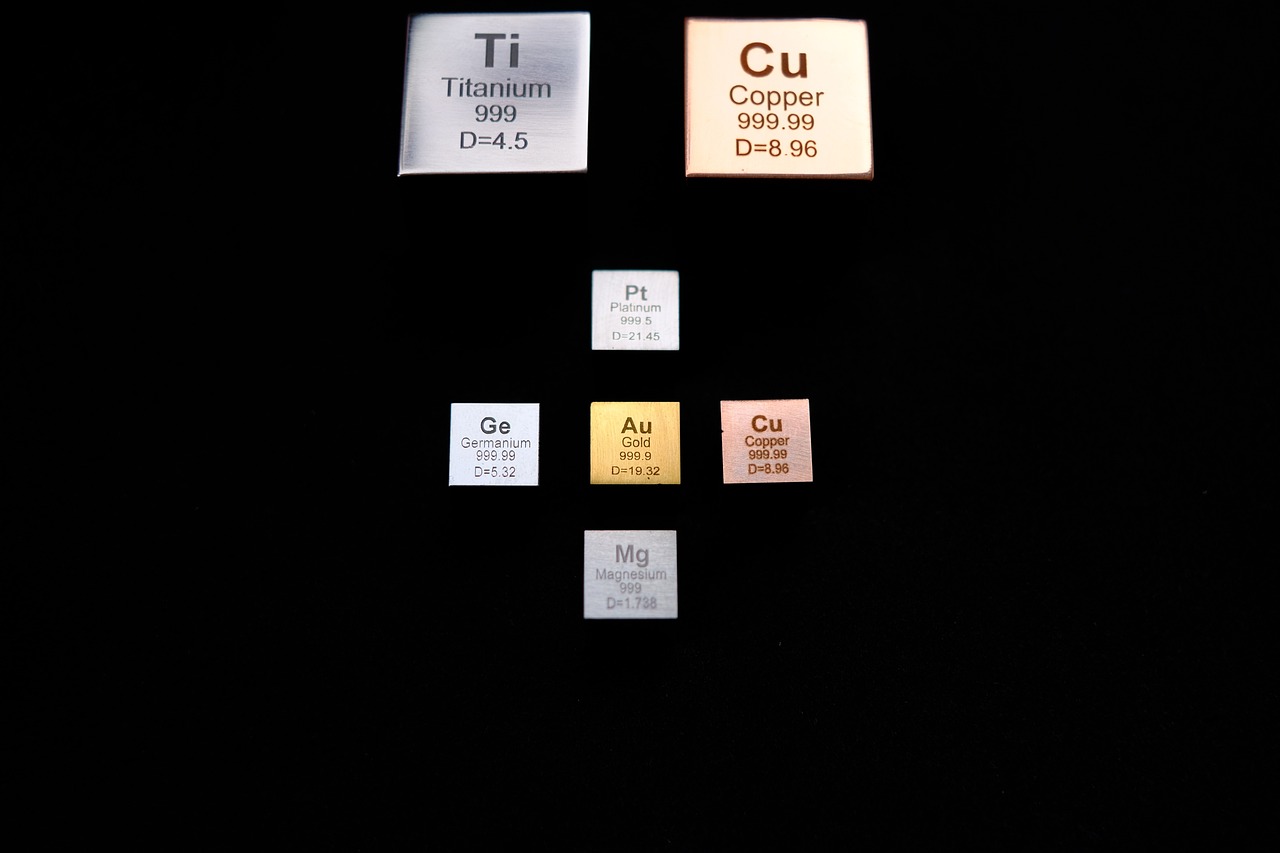
Density is mass divided by volume. In composite datasheets, it is usually shown as g/cm³, kg/m³, lb/ft³, or lb/in³. The basic conversion is useful in daily work: 1.00 g/cm³ equals 1,000 kg/m³ and about 0.0361 lb/in³. So, a GFRP profile listed at 1.80 g/cm³ is about 1,800 kg/m³.
Specific Gravity Compared With Density
Specific gravity is compared with water, so it has no unit. For many room-temperature plastic and composite checks, the specific gravity number is close to the density in g/cm³. ASTM D792-20 describes density and specific gravity testing for solid plastics by displacement, and it notes that the property can help identify a material and check uniformity among samples. Source: ASTM International, ASTM D792-20, current listing accessed in July 2026.
One Number Is Usually Not Enough
A density value without background can lead to the wrong weight estimate. Ask whether the number comes from a flat laminate, a pultruded profile, a molded compound, or a finished assembly with inserts. Also check if it is a nominal value or a tested batch value. A small rounding gap may look fine on paper, but it can matter when one order includes hundreds of 6-meter profiles.
How Dense Are Common FRP Materials?
In real purchasing work, the answer is a range, not one fixed number. Public standards do not give one density for all FRP because formulation, fiber content, and processing route all change the result. Open technical data still gives useful working ranges, mainly for glass, carbon, and aramid reinforced systems.
Glass Fiber Reinforced Plastic Range
Glass fiber reinforced plastic, often called GFRP or GRP, is often around 1.6 to 2.0 g/cm³ for structural pultruded products. Strongwell published FRP specifications list pultruded fiberglass material density ranges such as 1.66 to 1.94 g/cm³ depending on series and resin system. Source: Strongwell FRP Specifications, public technical document, accessed in July 2026.
A separate MFG Technical Design Guide for FRP composite products gives specific gravity values for different fiberglass reinforced thermoset processes, and many examples fall between about 1.37 and 2.08. This wider spread is normal because compression molding, hand lay-up, filament winding, and high-glass formulations do not use the same fiber and filler content. Source: MFG Technical Design Guide for FRP Composite Products and Parts, 2018 edition.
Carbon Fiber Reinforced Plastic Range
Carbon fiber reinforced plastic, or CFRP, is usually selected when the project needs high stiffness or strength with lower mass. A 2022 review in the journal Polymers lists carbon fiber density at about 1.7 g/cm³ and also reports glass/epoxy composite density over a wide 1.25 to 2.5 g/cm³ range. After carbon fiber is combined with epoxy or another resin, many carbon laminates fall near 1.4 to 1.7 g/cm³. The final number still depends on fiber volume, resin content, and laminate quality. Source: Polymers, “Test Methods for Characterizing the Properties of Fiber-Reinforced Polymer Composites at Elevated Temperatures,” 2022.
Aramid and Hybrid Composite Range
Aramid fibers are lighter than glass fiber. Public toxicology and material references hosted by the U.S. National Center for Biotechnology Information list para-aramid fiber densities near 1.39 to 1.48 g/cm³ for commercial forms. In an aramid reinforced plastic, the resin and fabric layout will move the finished laminate value. For that reason, any single AFRP density should be treated as product-specific. Source: NCBI Bookshelf, “para-Aramid Fibrils,” accessed in July 2026.
Which Factors Change FRP Density the Most?
If two FRP parts have the same outside dimensions but different weights, the reason is usually inside the laminate. Density changes when the maker changes fiber type, fiber loading, resin chemistry, filler content, void level, or production method. It is mostly about the recipe and process control, not guesswork.
Fiber Type and Fiber Loading
Glass fiber is denser than carbon or aramid fiber, so a high-glass GFRP product tends to weigh more than a similar carbon or aramid laminate. Fiber loading matters just as much. For example, if glass fiber is about 2.55 g/cm³ and polyester resin is about 1.20 g/cm³, a simple volume mix at 55% fiber and 45% resin gives about 1.94 g/cm³ before voids and additives. That is close to many structural GFRP datasheets.
Resin System and Fillers
Polyester, vinyl ester, epoxy, phenolic, and thermoplastic matrices all have different base densities. Mineral fillers and flame-retardant additives can raise density as well. This is why a fire-rated FRP panel may weigh more than a non-fire-rated panel in the same shape. If a supplier only says “fiberglass,” ask for the resin family and nominal specific gravity before confirming the order. It avoids awkward discussion after the pallet arrives.
Voids Moisture and Production Method
Voids lower measured density because air takes the place of solid material. That does not make voids a good way to save weight. They can reduce strength, surface quality, water resistance, and fatigue life. Pultrusion often gives steady density because fibers are pulled through resin and a heated die in a continuous process. Hand lay-up may show more variation unless the workshop controls resin content and rolling carefully.
How Can You Calculate FRP Part Weight Before Ordering?
You do not need heavy software for a first weight estimate. A calculator, a drawing, and a reasonable density value are enough for early purchasing work. Later, the supplier should confirm the final weight from the real profile geometry and production density.
Start With a Simple Volume
The basic formula is simple: weight equals volume multiplied by density. For a flat FRP plate, multiply length, width, and thickness. A 1,000 mm by 500 mm by 5 mm plate has a volume of 2,500,000 mm³, or 2,500 cm³. At 1.80 g/cm³, the plate weighs about 4,500 g, which is 4.5 kg before trimming, coating, holes, or metal inserts.
Use a Rule of Mixtures Check
For a quick material check, you can use the volume rule: composite density equals fiber volume fraction times fiber density plus resin volume fraction times resin density, with a small adjustment for voids if known. A carbon/epoxy laminate with 55% carbon fiber at 1.7 g/cm³ and 45% epoxy at 1.2 g/cm³ gives about 1.48 g/cm³. If the quoted part is far from that value, ask the supplier to explain it. There may be fillers, core material, or a different fiber content. See also: Application.
Add Real-World Allowance for Tolerances
Profiles are not perfect math shapes. Corners, radii, resin-rich zones, veils, and surface coatings can add or reduce small amounts. For purchasing, it is practical to allow a few percent weight tolerance unless the drawing or specification gives a tighter rule. In export shipments, this point matters because freight may be billed by gross weight, volume weight, or both.
How Should FRP Density Be Tested and Specified?
When density becomes part of quality control, use a named test method. “Lightweight” is only a sales word. “Density tested to ASTM D792” is a requirement that can be checked. This wording is much easier to use when batch records, inspection reports, or third-party checks are needed.
ASTM D792 Displacement Testing
ASTM D792 uses displacement principles for solid plastics. In a common procedure, the specimen is weighed in air and then weighed while immersed in liquid. The difference is linked to displaced volume, and density can be calculated from that result. Intertek’s public testing guide describes ASTM D792 and ISO 1183 as common density and specific gravity methods for polymers and notes the practical role of density in part weight and material yield. Source: Intertek Testlopedia, “Density and Specific Gravity ASTM D792, ISO 1183,” accessed in July 2026.
ISO 1183 Methods for Non-Cellular Plastics
ISO 1183-1:2025 covers density measurement for non-cellular plastics and includes immersion, liquid pycnometer, and titration methods. It also states that density is often used to follow changes in physical structure or composition. For FRP products, this is useful because density shifts can point to resin content changes, filler changes, or uneven production. Source: ISO, ISO 1183-1:2025 public standard summary.
Purchase Specifications That Avoid Surprises
A clear FRP purchase line should name the material family, density or specific gravity range, test method, tolerance, and whether the value applies to coupons or finished parts. For example: “Pultruded GFRP profile, vinyl ester resin, density 1.70 to 1.90 g/cm³ by ASTM D792.” It is a short line, but it tells the buyer, supplier, and inspector what will be checked.
When Does Lower FRP Density Matter Most?
Low density is not the only reason to use FRP. Corrosion resistance, electrical insulation, and low maintenance often drive the decision first. Even so, weight savings can change how a product is installed, shipped, lifted, and serviced over its working life.
Marine Panels and Corrosion Areas
On docks, platforms, wastewater covers, and chemical rooms, GFRP can reduce weight while resisting rust. A quick comparison shows why the difference is easy to see: steel is commonly estimated near 7.85 g/cm³, while many structural GFRP products sit near 1.6 to 2.0 g/cm³. That means a GFRP item may weigh about one quarter of a similar solid steel volume. The design thickness will not always be the same, so the final part weight still needs a drawing-based check.
Transport Parts and Hand-Carried Covers
Truck panels, rail interior parts, access covers, and tool housings all gain from lower part mass. If a technician lifts a cover every week, even a 3 kg saving is noticeable after some time. Carbon fiber may save more weight, but the cost can be much higher than glass fiber. The better choice depends on load, budget, production volume, and the service environment.
Structural Profiles Replacing Metal
FRP beams, channels, angles, and rods can replace metal in corrosive or electrically sensitive areas. Density alone is not enough for the comparison. Check the full design, including section shape, stiffness, deflection, connection details, fire rating, and allowed temperature. A lower-density material still needs enough section size to carry the load safely.
FAQ
Q1: What Is the Typical Density of Fibre Reinforced Plastic?
A: Many structural glass fiber reinforced plastics are around 1.6 to 2.0 g/cm³. Carbon, aramid, fillers, resin type, and process can move the value, so use the supplier’s tested datasheet for final design.
Q2: Is FRP Lighter Than Aluminum?
A: Often, yes, but not always by a large margin. Aluminum is commonly near 2.70 g/cm³, while many GFRP profiles are around 1.6 to 2.0 g/cm³. Carbon fiber composites can be lighter, depending on the laminate design.
Q3: Why Do Two GFRP Products Have Different Density?
A: They may use different glass content, resin systems, fillers, veils, pigments, or manufacturing methods. A fire-retardant filled product, for example, may be heavier than a standard corrosion-resistant product.
Q4: How Do You Convert FRP Density From g/cm³ to kg/m³?
A: Multiply by 1,000. For example, 1.85 g/cm³ equals 1,850 kg/m³. For a quick weight estimate, multiply that density by the part volume in cubic meters.
Q5: What Test Method Should Be Used for FRP Density?
A: ASTM D792 and ISO 1183 are widely used for plastic density and specific gravity testing. For purchase orders, name the method, target range, and tolerance so the inspection result is clear.